Integrated Automotive
Diagnostics System
A vehicle-integrated diagnostic interface designed to replace ambiguous warning lights with clear, actionable guidance. The system helps drivers understand what is wrong, how urgent it is, and what to do next.
This would reduce stress, prevent unnecessary costs, and create informed maintenance decisions, and increase road safety.
January 2025 - March 2025
Empathize
Ideate
Design
Prototype
Quick Overview
The Problem
Drivers receive vague warning lights such as “Check Engine” that don’t specify the issue, its urgency, or next steps. This causes unnecessary stress, leads to delayed maintenance, and increases the likelihood of either overpaying for minor repairs or ignoring critical issues. Nearly 41% of active vehicles are overdue for critical maintenance, contributing to 44,000+ crashes annually linked to unmaintained cars, compounded by widespread vehicle owner mistrust within a $20B auto repair fraud market.
The Solution
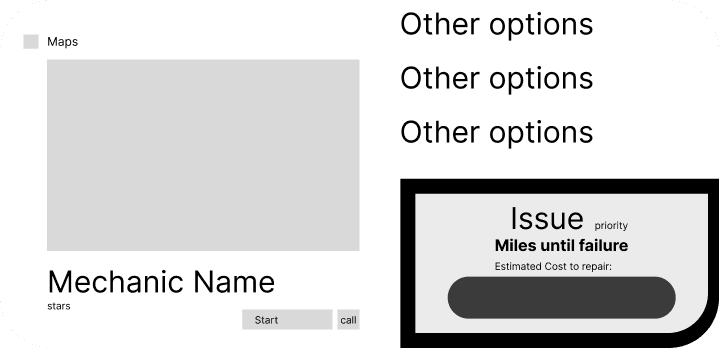
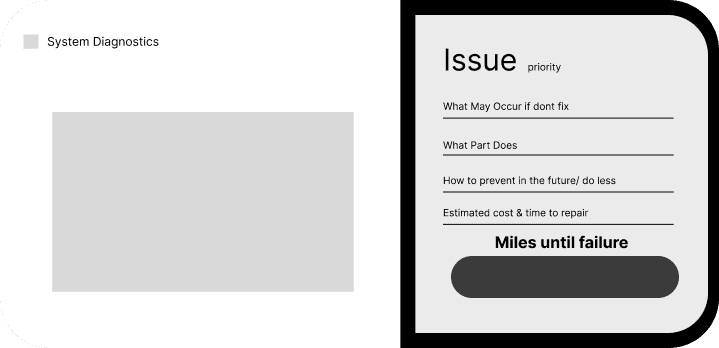
Drivers need a way to independently understand what the issue is, its urgency, the consequences of delaying repair, and the expected cost and time burden. The Integrated Automotive Diagnostics System delivers clear explanations, actionable next steps, cost estimates, and navigation to nearby mechanics.
Jump to design
Product Goals
Redesign vehicle warning systems to reduce cognitive and emotional friction, making moments of stress and uncertainty into clear, actionable guidance.
Equip drivers with accessible, transparent diagnostic information to help them understand what is happening in their vehicle, why it matters, and what their next steps should be.
Increase driver knowledge, confidence, autonomy, & road safety by closing the knowledge gap between drivers and mechanics, enabling more informed, timely, and proactive maintenance decisions.
Empathize
Utilized Methods
Competitive Analysis
Interviews & Affinity Diagram
Persona
Journey Mapping
Competitive Analysis
Before moving forward, I completed a competitive analysis to verify this is a product that is truly needed. I analyzed three other diagnostic systems and found this technology does exist, but it is clearly catered for mechanics and experts. To read it, a user must have previous knowledge of the system and understand technical error codes as these systems fail to to translate the diagnostics into language every-day drivers can use. Additionally, costs range anywhere from hundreds to thousands of dollars, limiting accessibility.
User Discovery
Next, I conducted five interviews to deepen my understanding of the problem. My screener questions were designed to ensure participants aligned with my target audience: drivers who are not well-versed in vehicle functionality or engine maintenance and who express limited trust in mechanics. Higher-mileage drivers were prioritized due to their increased exposure to maintenance scenarios, but lower-mileage drivers were not excluded if they met the core criteria.
Data Synthesis
Key Takeaways
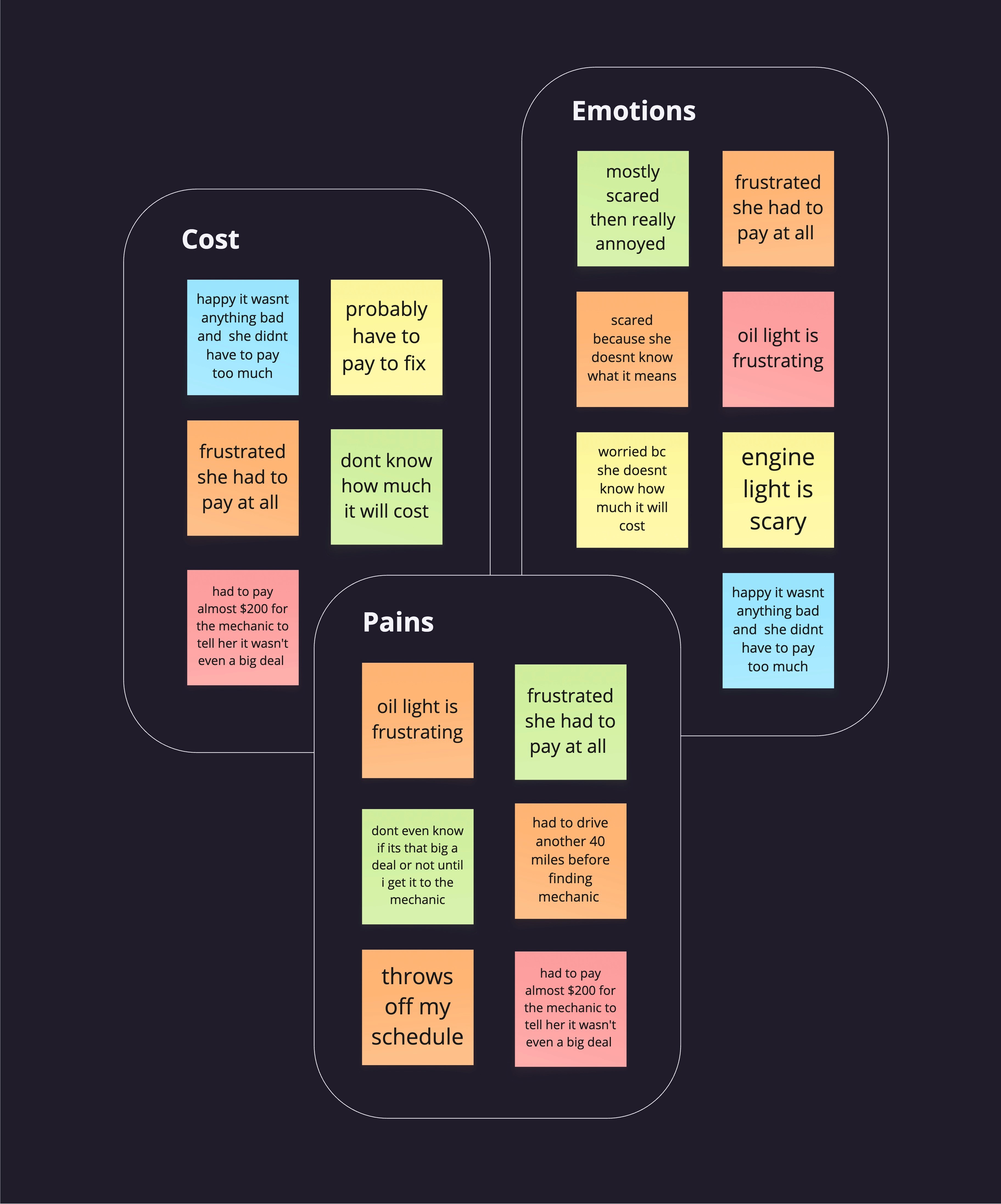
The "Check Engine" light is scary because it appears suddenly and its meaning is unknown. It could be a benign problem, or it could be life-threatening.
Suddenly needing to go to a mechanic is inconvenient because it takes away from scheduled time, interfering with life, work, school & kids schedules.
The cost of just getting your car checked is a burden even if there is no problem, vehicle owners would still have to pay for bringing their car in to be serviced.
Affinity Diagram
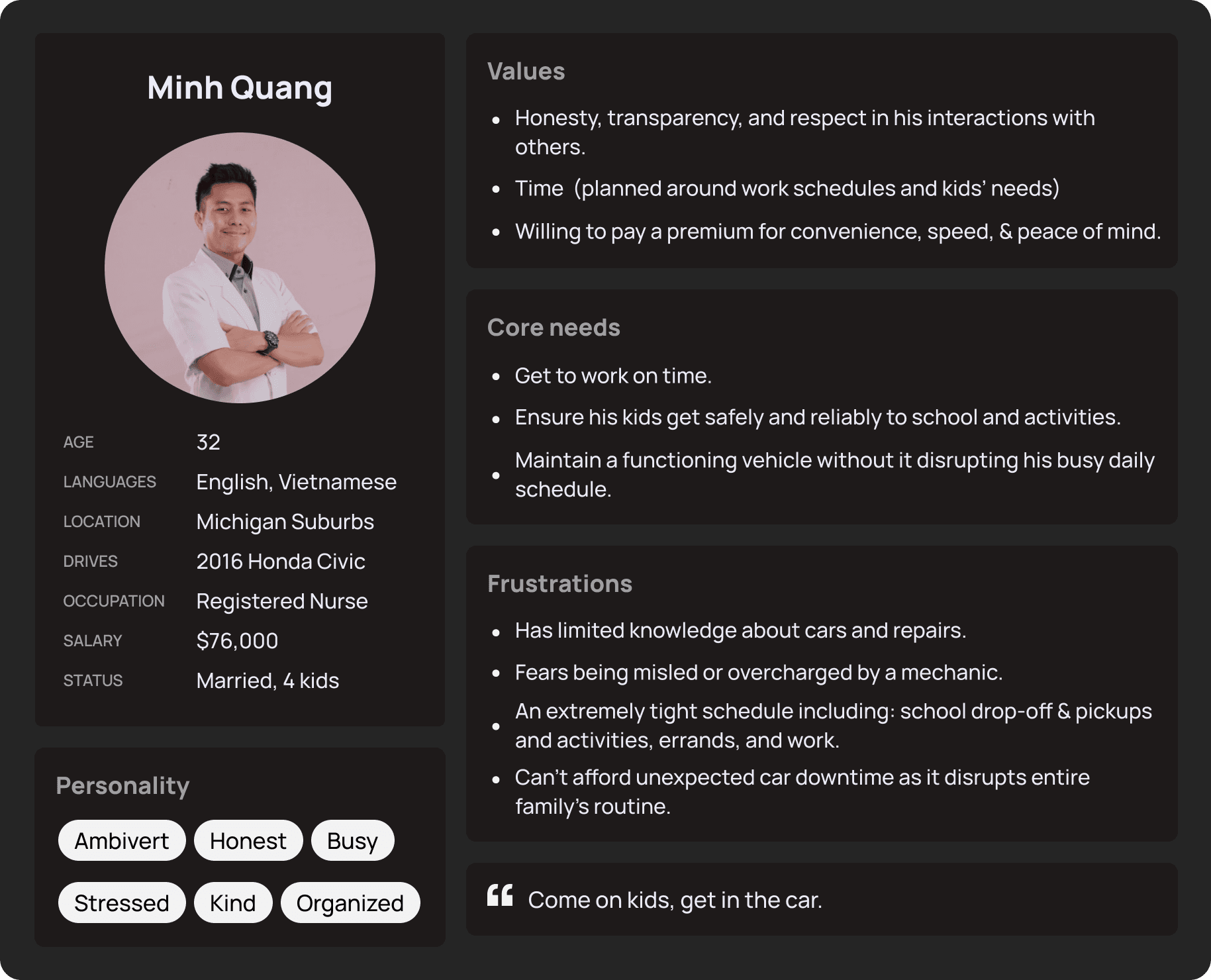
User Personas
Minh is a full-time nurse and a full-time dad. He and his wife, also a nurse, work opposite shifts at the hospital so that one of them is always home to take care of their four young kids. It’s a delicate balance: while one is pulling a 12-hour night shift, the other is handling school drop-offs, soccer practice, appointments, and grocery runs. On his days off the hospital, Minh is the parent, running the household and keeping the kids’ busy schedules on track.
With their routine built around tag-teaming both parenting and nursing shifts, the family car is crucial. Whether it’s hauling kids to school or racing to the hospital for a shift change, losing access to the car, even for a day, would throw their entire rhythm into chaos.
Journey Mapping
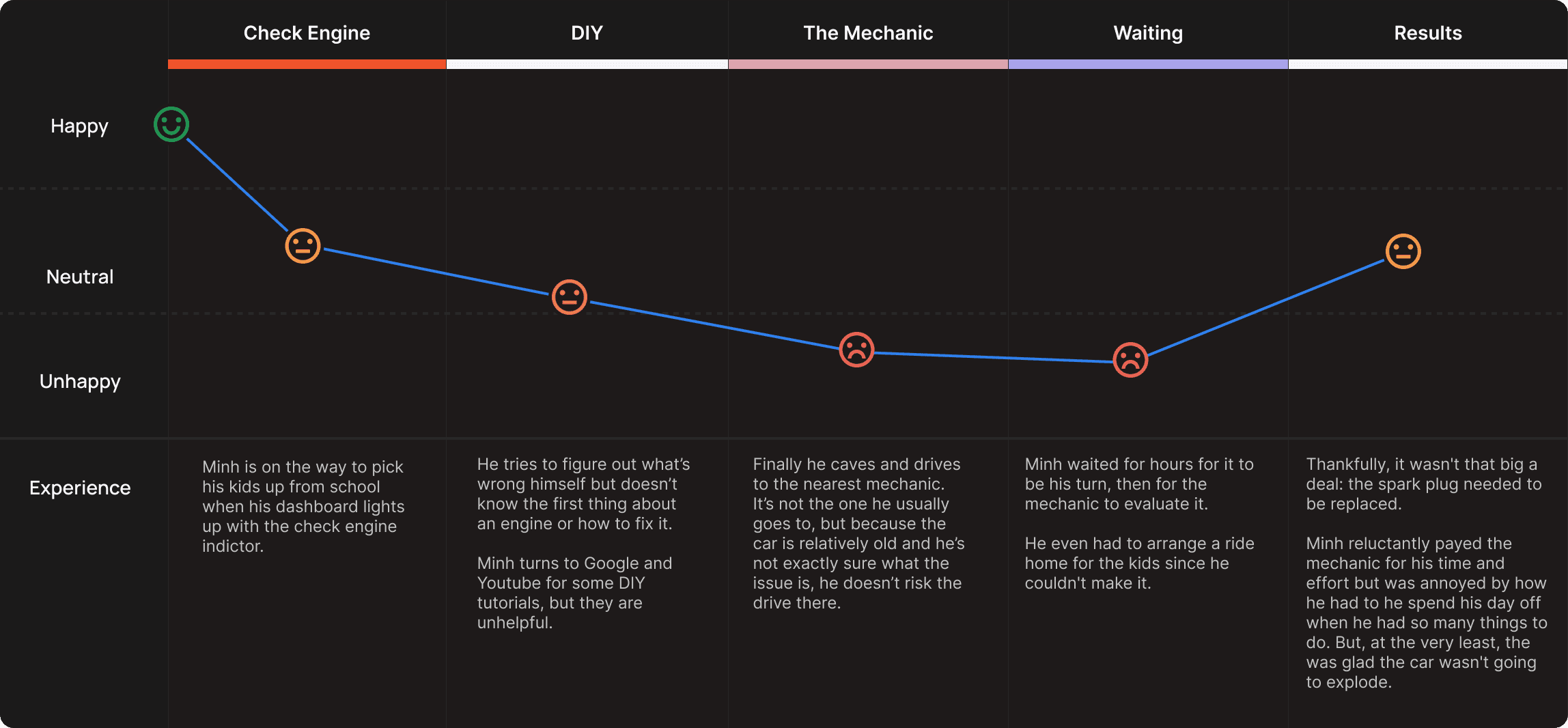
My research helped me make informed design decisions to solve this problem. I was able to understand the connection of maintenance failure and over 44,000 yearly crashes that lead to roughly 2,600 deaths and 100,000 disabling injuries yearly. People do not understand the necessity of maintaining their vehicle, because they do not know the severity of the issue. Also, the sudden interruption of the day and sudden expense is off-putting.
Ideate
Utilized Methods
Journey Mapping (with diagnostics)
User Flows
Journey Mapping
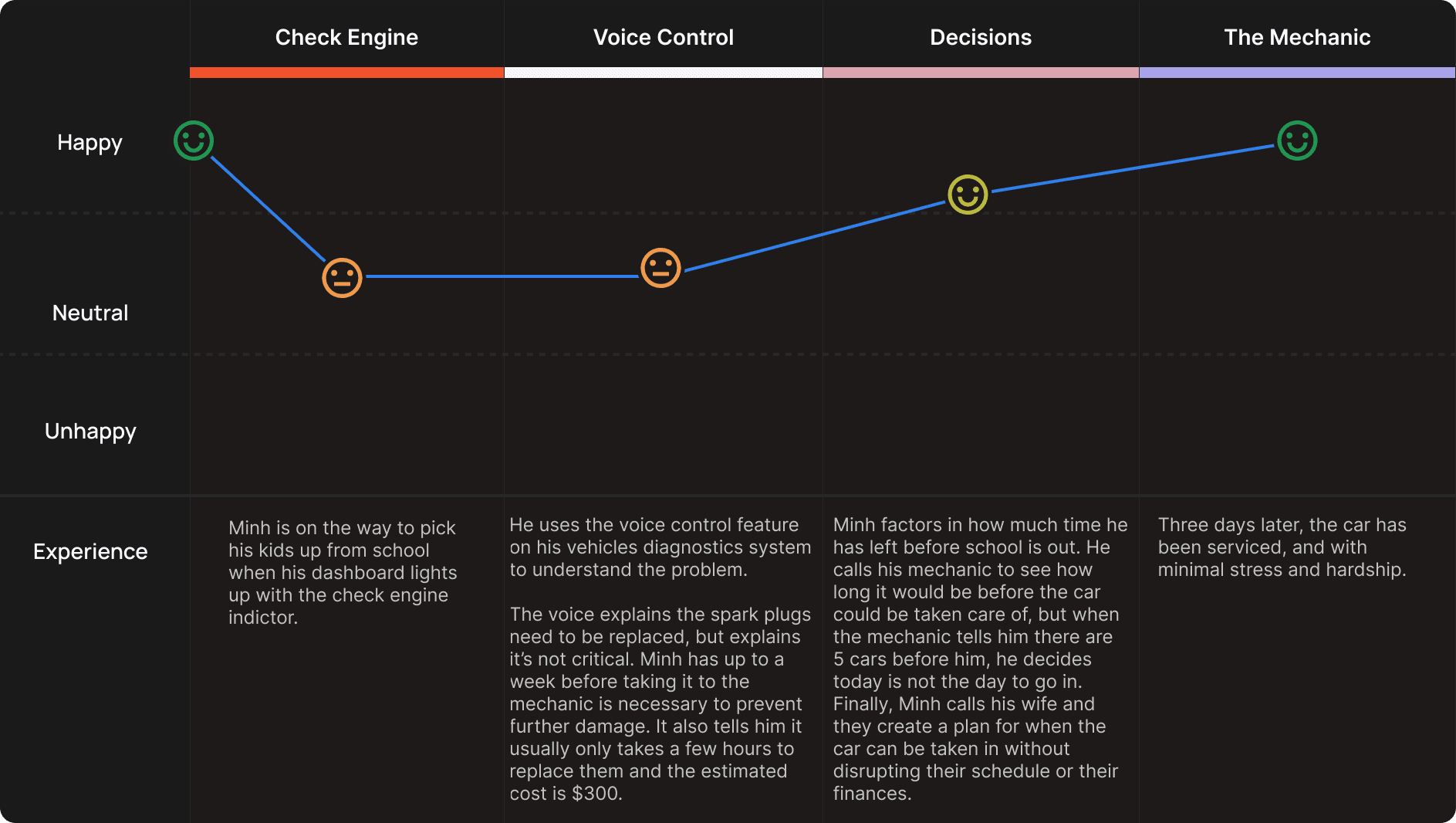
I created a second journey map while ideating. This one is what could have happened if the driver was able to use an integrated diagnostics system in their vehicle while they were driving.
User Flow
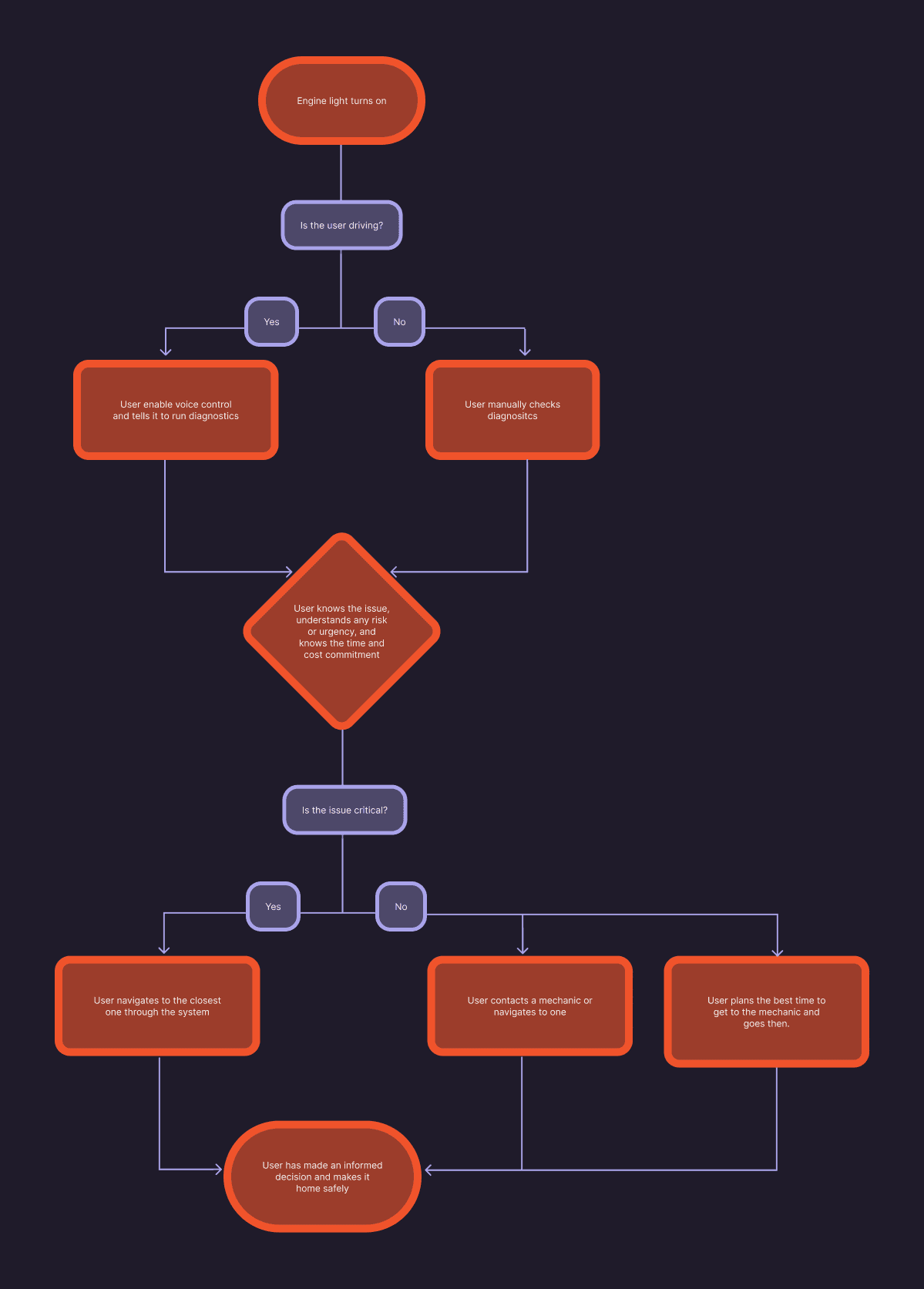
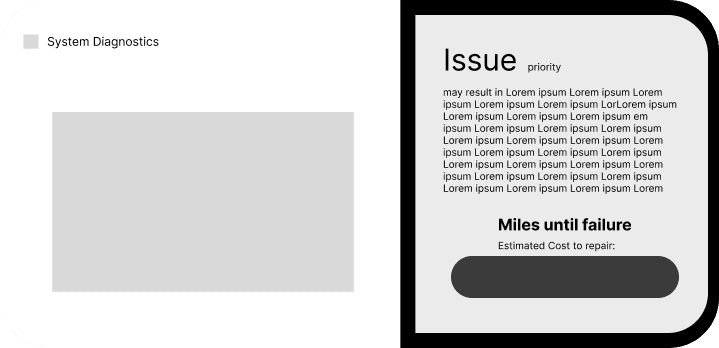
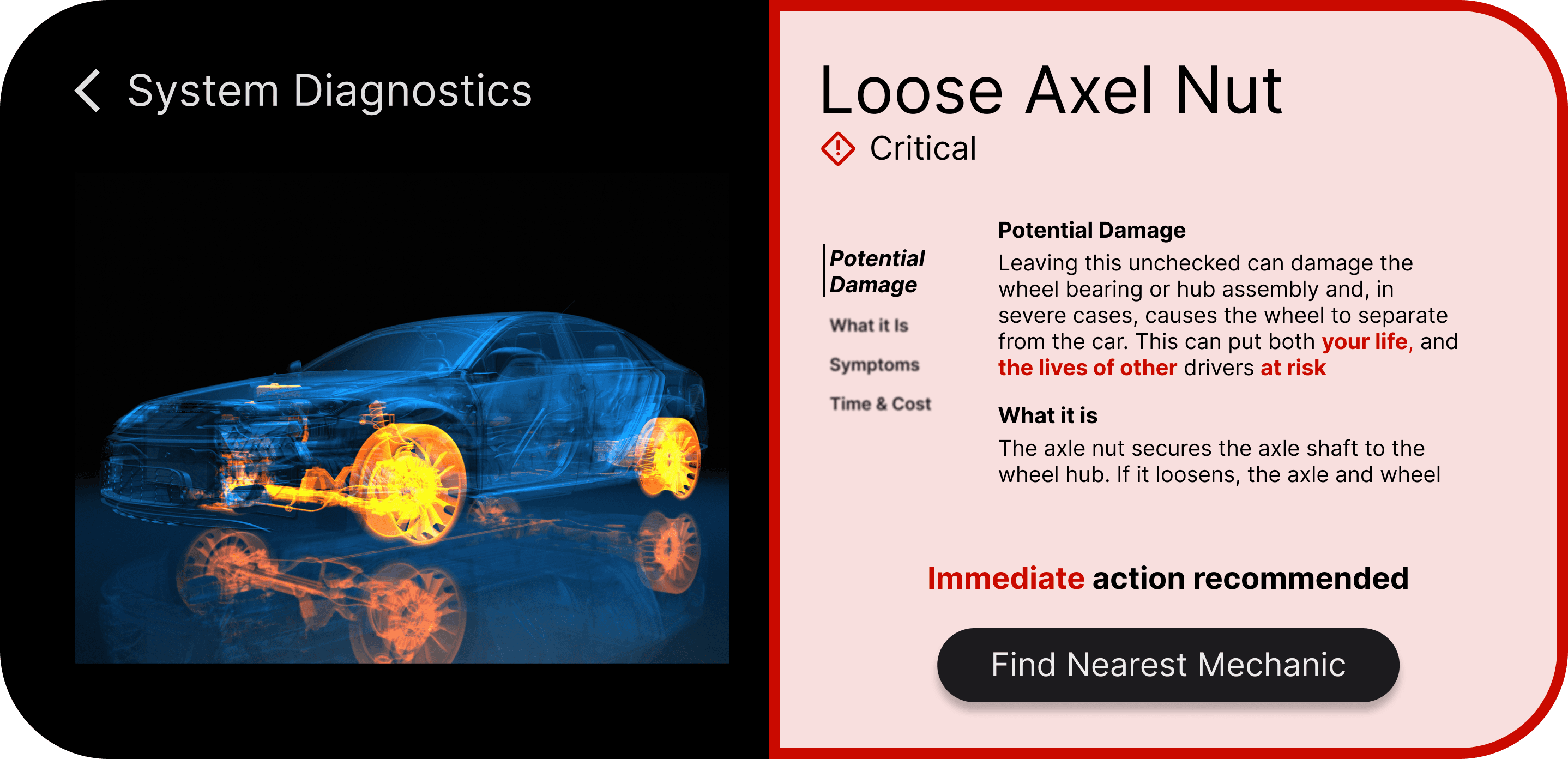
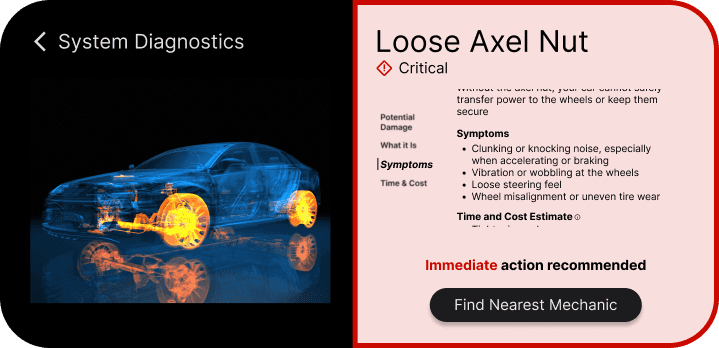
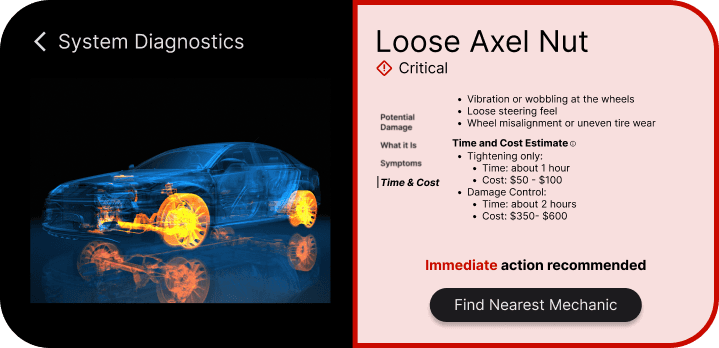
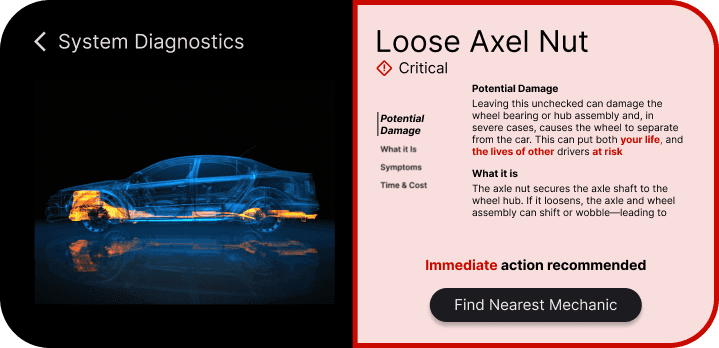
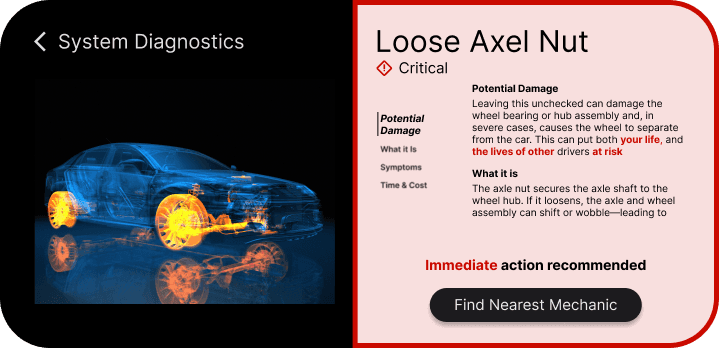
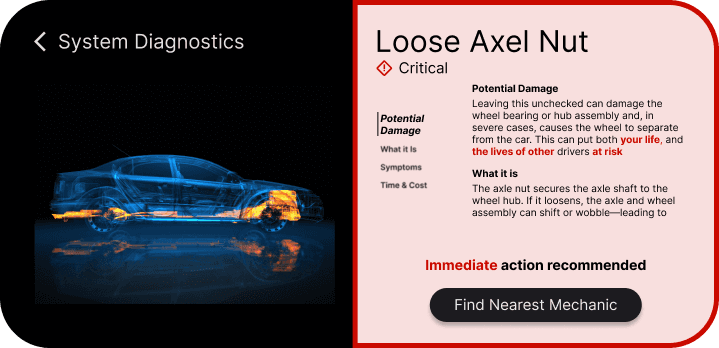
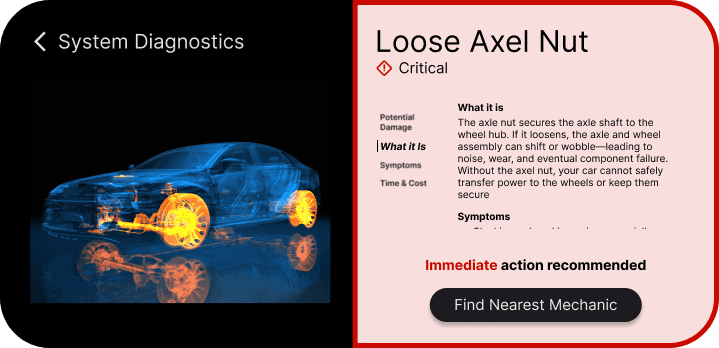
By the end of ideation, I knew I wanted a straightforward interface that could be utilized while stationary or driving, but still safe and responsible either way. I knew I needed to communicate information through multiple formats to accomplish this while still accommodate different cognitive styles of absorbing information.
Design
Utilized Methods
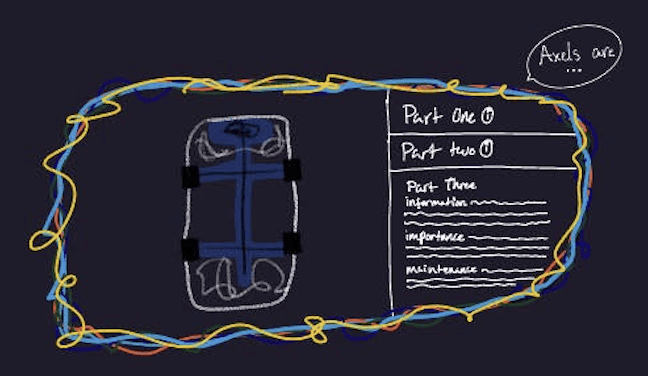
Low Fidelity Sketches
User Flows
High Fidelity Designs
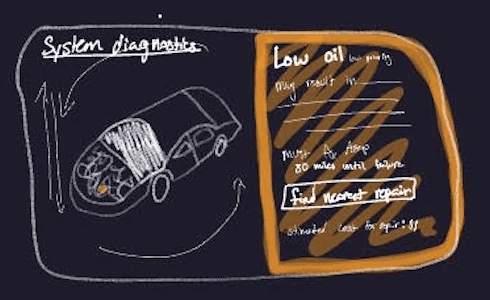
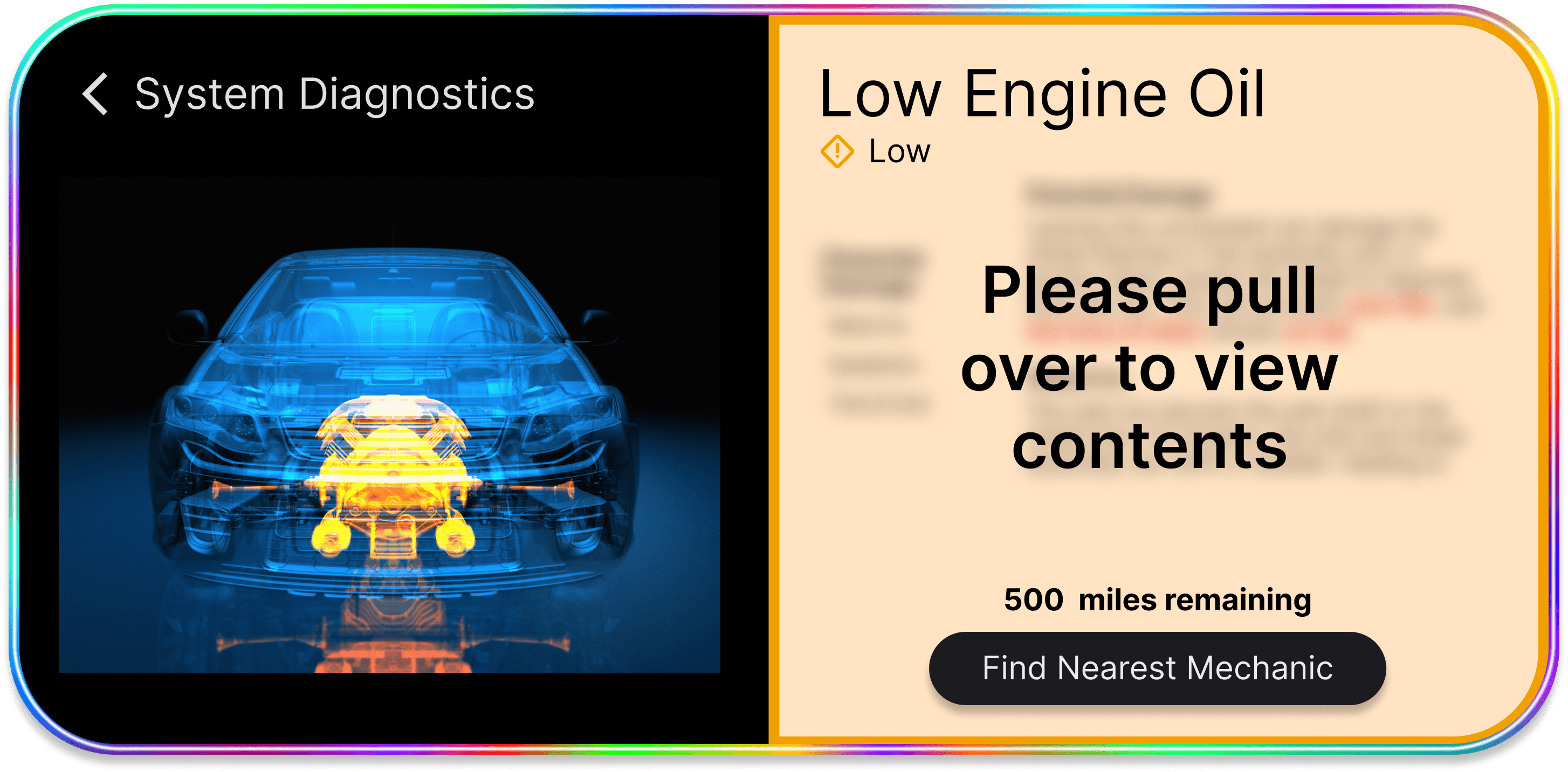
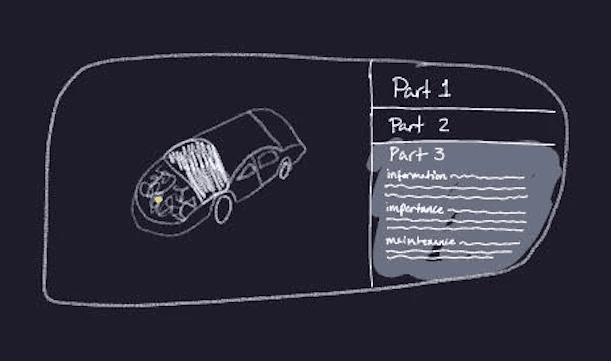
Lo-fi. Mid-fi. Hi-fi.
Prototype
In Retrospect…
Due to the scope of the course and assignment constraints, I was unable to fully build out the prototype to the level I originally envisioned. With additional time, I would expand the system to include a vehicle knowledge hub where users could explore key parts, understand their function and importance, and reference maintenance needs, if any, in a clear, digestible format.
Further development would also require usability testing, with particular focus on the cost-estimate feature. While transparency can build trust, it can also potentially increase anxiety. Testing would determine whether upfront cost projections encourage proactive maintenance or instead lead users to delay service due to anticipated expense.
Beyond user testing, I would consult automotive engineers and industry professionals to assess the technical and long-term feasibility of such a system, as costs are constantly changing with new government regulations on imports, inflation, and part discontinuation.
The ideal system would have dynamic pricing logic, periodic recalibration, and safeguards against outdated estimates.